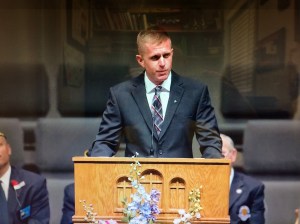
Author’s note: This was a speech that I delivered on Veterans’ Day, 2014 for a ceremony held at Lakewood Baptist Church in Gainesville, GA. If I’d known ahead of time how much emotional difficulty I would have in delivering it, I may have backed out of the whole thing. A flood of emotion came over me, most unexpectedly, and I had to pause more than once to get through it. It brought to my attention the possibility that I may have some unreconciled issues from my tour. I’m not broken, I sleep just fine, and I don’t need sympathy; it might just be something to address. Please forgive the broken format of the writing, I’ve published it here just like I wrote the speech notes.
___________________________
Good morning ladies and gentlemen, and thank you for the opportunity to speak here today.
Before I begin, I must confess that I’m here due in large part to the fact that I’m simply trying to be a good Marine.
A few months ago I was approached by a good friend of mine, LtCol Scott Ballard, USMC retired.
LtCol Ballard called me up and said he wanted to stop by my office for a friendly visit… he’s never done that before.
Now, I’ve been out of the Marine Corps for a few years, but I’ll confess that I experienced a little trepidation about the Colonel’s visit. Maybe it was just left over from the days of speaking only when spoken to by a field grade officer, I don’t know, but I was a little nervous.
So LtCol Ballard stopped in and we had a friendly chat and visited for 10 or 15 minutes before the other shoe- or combat boot, as it may be- dropped.
“Stephen,” he said, “I don’t know if you’d be interested or not, but as you know I spoke at last year’s Veteran’s Day event at Lakewood Baptist Church, and they’re wanting me to help identify someone to be this year’s speaker…”
That was the Colonel’s way of saying, “Tag- you’re it Marine!”
So like any good enlisted Marine, I said, “aye-aye sir” and marched with my orders. And here I am.
But I’m kidding, of course. I’m more than humbled and honored that the Colonel and the staff of the American Legion Post would consider me for the occasion, and I would like to thank them all for this opportunity.
In talking with the Colonel about speaking today, I explained how I wasn’t sure I’m the right person for the job. I have no grand combat exploits to tell. I didn’t suffer any tragic war wounds or have a chest full of medals for valor. I’m no hero… I’m just a regular Marine.
“Just tell a story,” he said.
So I gave that some thought, and I came to the conclusion that I’m not really comfortable telling my own lackluster story, when there are so many men and women out there that have truly extraordinary ones.
I guess I feel a little embarrassed to stand here today drawing attention to myself, because there truly are heroes among us, despite that term being somewhat over-used in recent years, and they are the ones deserving of the credit.
But back to my purpose today… “just tell a story,” the Colonel said.
So I thought about it, and the only way to say it is this: my story is not mine at all. It’s the story of veterans- all of us.
And after all that’s what today all about – Veteran’s Day.
Webster’s defines a veteran as “an old soldier of long service or a former member of the armed forces.”
While I don’t disagree with that definition, it’s a bit mechanical, and I say that because it leaves so many things unmentioned.
It does an adequate job of telling us what a veteran is… but it fails miserably in telling us who our veterans are.
So that’s what I’d like to do… talk about who our veterans are.
———————————————–
The definition doesn’t allude to the turmoil experienced by all Soldiers, Sailors, Airmen and Marines when they find themselves saddled with the task of informing their loved ones that they would soon be shipping out for war- either by choice or mandate.
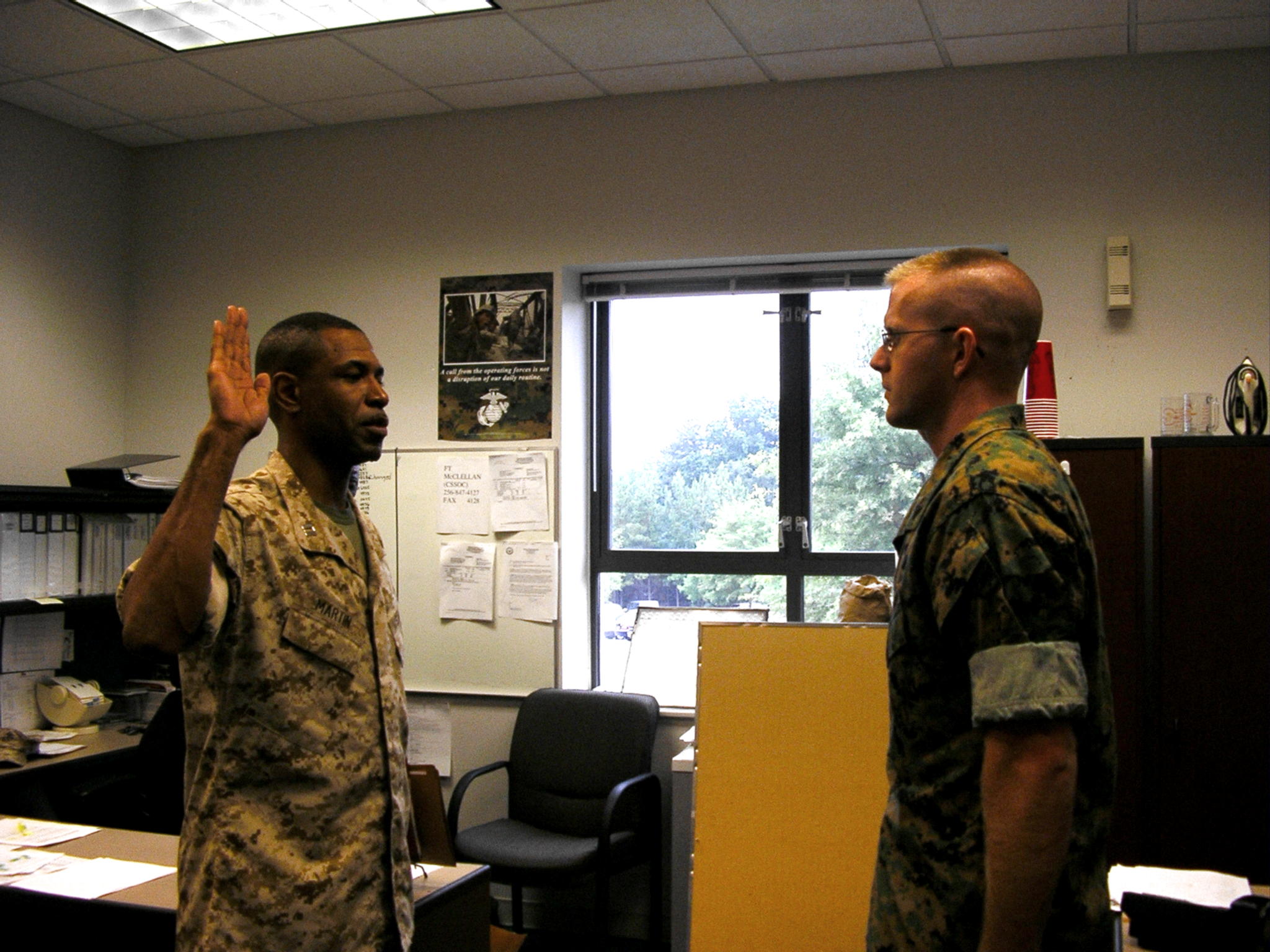
For me, that was a night not unlike many others. It was 2005 and I had just recently re-joined the Marine Corps Reserve after being out for several years. My wife- who was very pregnant at the time with our second son- sat with me in our living room watching TV, after we’d put our three year-old son to bed.
My stomach was in a knot, but somehow I finally got up the gumption to tell her that her that a deployment opportunity was on the horizon and they were calling for volunteers.
I didn’t really know how to advance the conversation beyond that point, but she was obviously reading my mind.
“Are you thinking you want to go?” she asked.
My response was to say- almost apologetically- “I’d kinda like to.”
And with tears welling up in her eyes, knowing full well that I had a choice in the matter, my wife’s only reply was, “well I don’t guess you really have any choice, do you?”
How many times has that same scenario played out in living rooms across America?
Those men and women- the ones that have had to look their wives and husbands in the eye and say it’s time to go- they are your veterans.
———————————————–
But I should probably back up just a bit.
When I rejoined the reserve, I really did it with one intention- to deploy to either Iraq or Afghanistan at the earliest opportunity.
I didn’t have to wait long. The Marine Corps soon announced that it need volunteers for a deployment cycle, and it didn’t matter what your military occupational specialty was because they were filling billets for a unit called “PRP.”
Well, in the lingo that I knew, the acronym “PRP” stood for Provisional Rifle Platoon, otherwise known as combat replacements.
“This is it!” I thought. I’m going to get my chance at an assignment with an infantry unit and fulfill the age-old axiom that the Marine Corps lives by: “Every Marine is first and foremost a rifleman.”
Well… not exactly. In this instance, PRP was short for Personnel Retrieval and Processing- formerly known as mortuary affairs, or in wars past as graves registration. The primary mission of the unit is the timely and proper evacuation of our battlefield casualties back to the United States for burial.
I gave it some thought, and in the end I decided that as unpleasant a business as that may be, it was a very important one.
“No one left behind” is a common phrase in the military. It was time to put my money where my mouth was. So I signed up.
Which brings me back to that conversation with my wife that night.
A short time after that, I hugged and kissed my wife, my newborn son, and my 3 year-old before heading out the door with my sea bags packed.
And that scenario too, has been repeated all across the country, far too many times to count.
All the men and women who packed their gear and kissed their babies goodbye- some for the last time- they are your veterans.
———————————————–
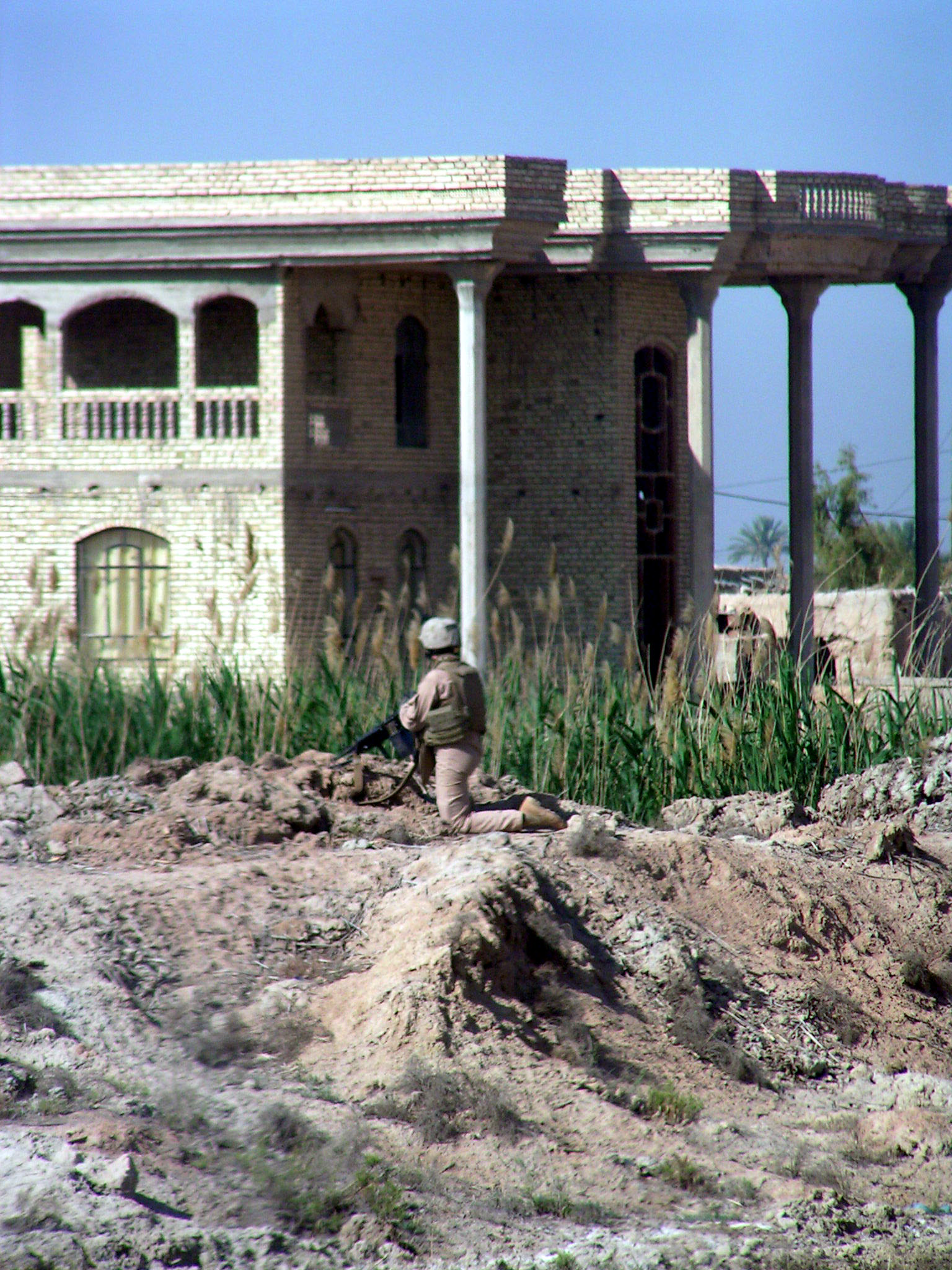
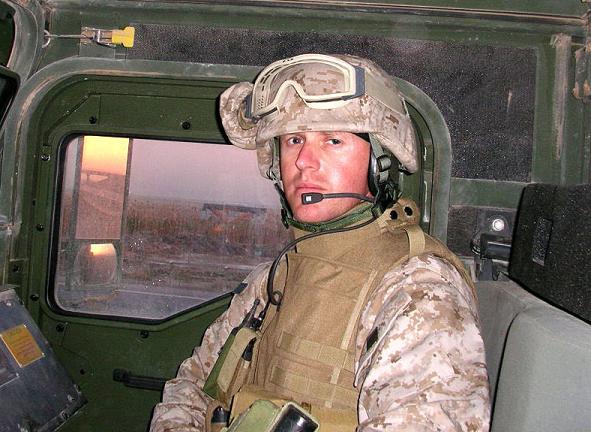
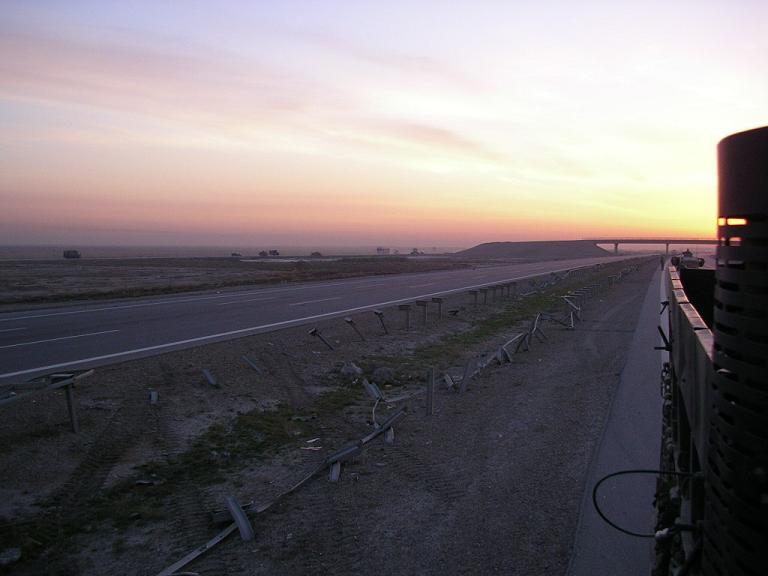
Shortly after I arrived in Fallujah, we were sent out on our first recovery mission. A Humvee had been hit by an improvised explosive device. Several Marines had been wounded, and one had been killed.
Our team arrived at the attack site in the pre-dawn hours and we were met by a young, solemn-faced Staff Sergeant who explained the security situation, the attack, and then pointed us to the vehicle.
He left us to the grim task of recovering the fallen Marine from the vehicle, and once completed, prepared us all for extraction from the area. But before we all mounted up in our vehicles, he paused and thanked us.
The SSgt told us that the Marine that had been killed was only on the mission that night because he wanted to be. His unit’s tour was at its end, but he’d tagged along just to make sure- one last time- that the crew that was replacing him was locked-on. He didn’t even have to be there. Had he not gone, the SSgt I was speaking to would probably have been in that seat.
That sobering reality was visible all over the SSgt’s face.
How many of our servicemen and women have lived through it- right next to others that didn’t- and been tormented by the question, “Why them and not me?” Those men and women are your veterans.
———————————————–
One afternoon in Fallujah our team was at the command post with nothing much going on. In our business, boredom was a good thing.
We were situated right next door to the battalion surgical center, so you can probably imagine some of the activity that went on around there.
Suddenly we heard the sound of vehicles rapidly approaching, with horns blaring and someone shouting.
The vehicles roared up to surgical and a frenzy of Marines and Navy Corpsmen swarmed over one particular Humvee, off-loading casualties and rushing them inside.
One Marine- the one that we’d heard doing all the shouting- was obviously distraught.
He dismounted from the turret of his vehicle, slammed his helmet on the ground and turned loose a blistering string of profanity as he kicked the helmet and slung the rest of his gear onto the ground before collapsing to his knees and weeping uncontrollably.
A Navy Chaplain was soon at his side.
His buddy was one of those casualties and had been killed by a sniper.
That Marine, and countless others that lose their buddies in hostile foreign lands- they are your veterans.
———————————————–
As part of our job, we always dealt with a representative from the unit of a fallen Marine, usually the most senior enlisted men and officers. There were business matters that had to be tended to: positive identification, inventory of gear and personal affects, etc.
As a result, senior leadership visited us often, and they were familiar with our processes, procedures, and some of the challenges we faced.
One of those challenges was that we weren’t always able to get a fallen service member immediately en route for evacuation. Sometimes aircraft weren’t readily available, sometimes weather prohibited flight, sometimes hostile fire delayed them.
For any number of reasons, sometimes we just couldn’t start them on their final journey home right away, and our senior leaders understood this.
As such, a grim reality is that our unit had to maintain a walk-in refrigeration unit for such occasions. It was around in the back of our building, behind camouflage netting, out of sight from everyone. Those senior leaders knew about it though.
On more than one occasion, long after a casualty was brought in, processed, and awaiting a transport helicopter, we would get a knock on the door in the darkness.
We would open it to be greeted solemnly by one or two of those senior leaders, sometimes with a Navy Chaplain in tow, with a simple request: “can I step out back to spend a few minutes with my Marine?”
It was against our policy to do this once the refrigeration unit was closed, but I don’t have to tell you what our reply was. We violated that policy every single time.
I would unlock the unit and stand by, cover in hand and head bowed while those leaders attempted to make their peace with what had happened to one of those in their charge.
It wasn’t until I saw a Captain of Marines lift his head from prayer one night at the doorway of that refrigeration unit with tears in his eyes that I fully appreciated the burden of command.
That Captain, and all those that lead us into battle, willingly bearing that burden and living with the consequences- they are your veterans.
———————————————–
And while there are many more instances that I could relate that are no less poignant than these, I’ll relate just one more.
While serving at AL Taqaddum we received word that a unit was bringing in a casualty, but this one was going to be handled a little bit differently. Members of his unit would be present while we conducted our business, which was expressly forbidden under normal circumstances.
Prior to their arrival we learned that the casualty was the first Navy SEAL to be killed in Iraq, and his teammates were accompanying him all the way home.
There was much trepidation prior to their arrival, but once they were at our facility it became clear that these men were in fact the consummate professionals that they were reputed to be.
What we saw was not a down-trodden crew, hanging their heads and moping about in sorrow.
They were solemn, yes. But there was an indescribable air about them. They had a grim task at hand, and they were mourning their friend and comrade, but it was very clear that this too would pass.
And when it did, they would be right back in the fray, doing what they train to do.
Absolute professionals.
And that is the final point that I’ll leave you with- the men and women who we task with our nation’s most daunting tasks, the most dangerous missions in the most hostile lands, to go abroad and do our country’s bidding despite all the sacrifices and personal loss- those are your veterans.
———————————————–
In closing ladies and gentlemen, I would like to simply say thank you.
I thank those of you who have served… for your service.
I thank those of you who have loved and supported those who have served.
And I thank this great nation of ours for the opportunity to serve. For that I owe a debt of gratitude.
May God bless our veterans, and may God bless the United States of America.


 Infrequently Sublime