A Study in Contrast

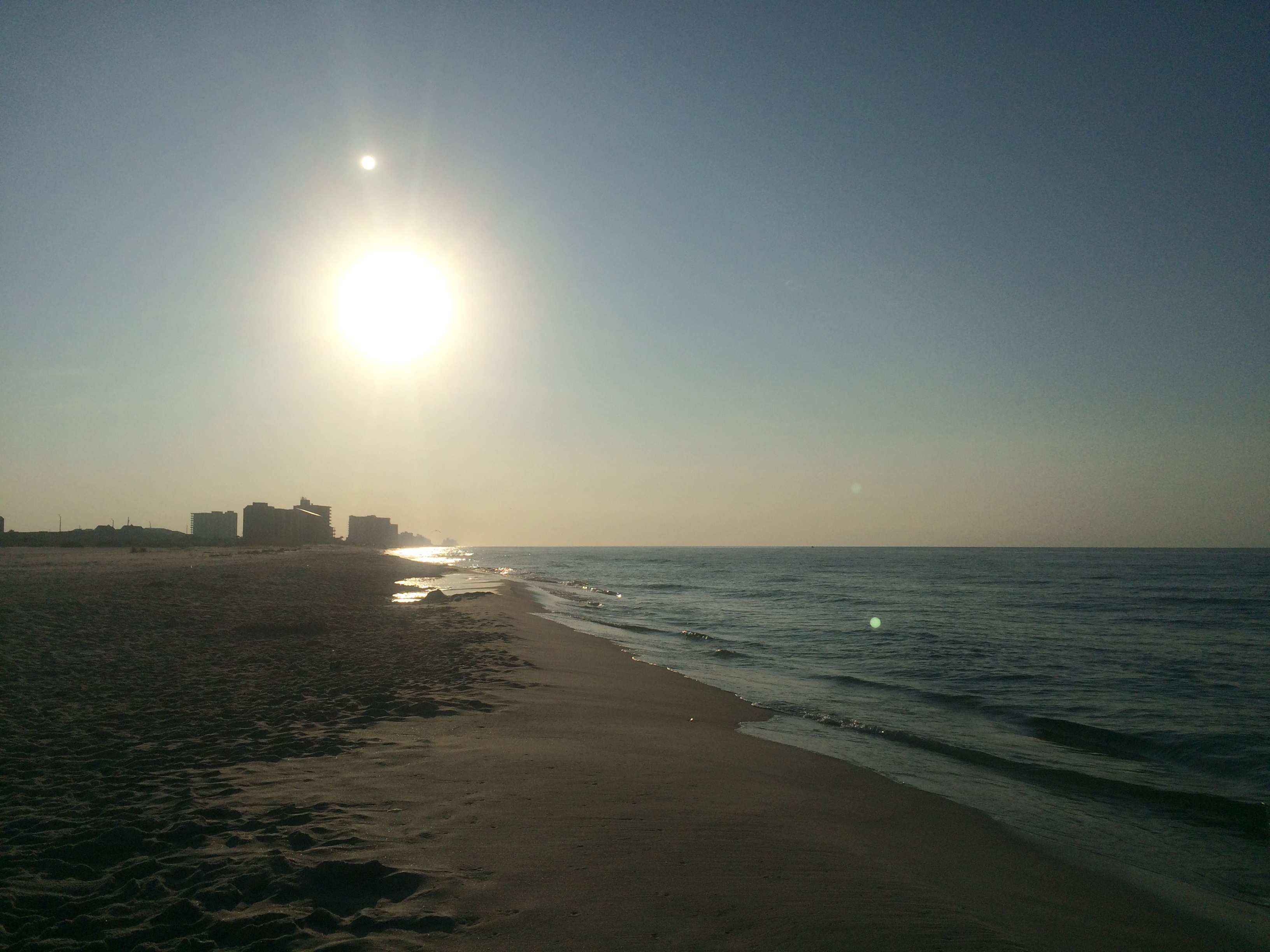
Orange Beach

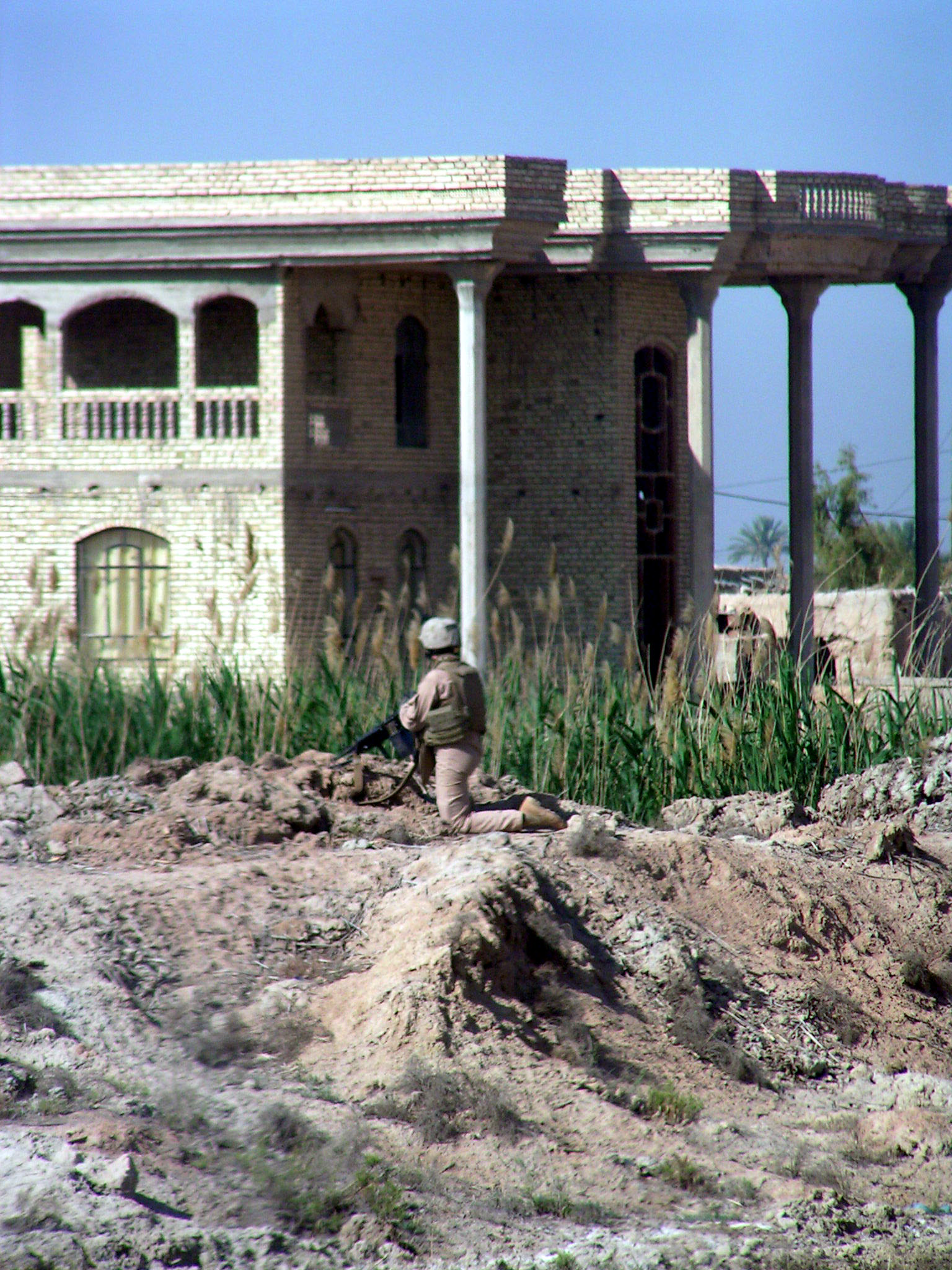
MINOLTA DIGITAL CAMERA

A few days ago I sat poolside at a family resort on the Gulf of Mexico, soaking up way too much sun and not a little alcohol. The ladies had ventured out to sort through the commercial flotsam of the local shopping district, and the rest of the guys had ventured onto the high seas in search of scaly quarry. I, having become very susceptible to motion sickness in recent years, opted for a day of poolside respite.

It occurred to me, as I stared from beneath my Oakleys and ball cap, that I’d not had such an opportunity in more years than I could recall. No immediate obligations. Just time to sit, observe, and think.

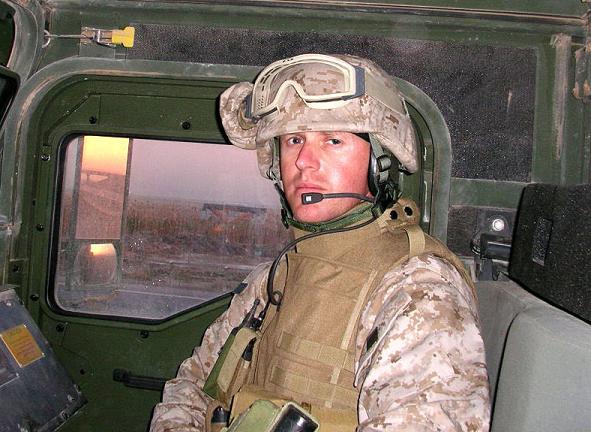
It had been nine years since I returned from Iraq. Another lifetime ago, it seemed. I’m a veteran now, not someone still in the mix. I don’t run around with “OIF veteran” and USMC stickers on my truck, and I don’t wear the tee shirts or the ball cap. I like being invisible. I don’t talk about it unless asked, but it doesn’t bother me or define who I am. It’s just something I did.

But every once in a while, in rare moments like the one by the pool, the sobering reality comes back. A reality like none other. The sickening boom of an IED in the distance, immediately followed by machine gun fire. Artillery firing overhead. The “crumpf” sound of incoming mortars. The endless drone of diesel generators. Dead Marines. Live Marines. Tears of those who loved them. Photos in their pockets. Names. Faces. Sounds and smells. My God, the smells.

I’m not a nosey person, but I found myself eavesdropping on a couple of young guys hitting on the cute girl a couple of chairs down from me. They were just starting college, and she was just finishing. They were all participating in the dance, but none would admit it. Then for some reason I got a little pissed off. It was amusing really, the falseness of it all. It was all such bullshit. Just a handful of years prior to that, my fellow Marines and I numbly and mechanically processed and prepared dead Marines about the same age as these knuckleheads for their final journey home. Kids who joined the Marine Corps, perhaps with visions of wartime grandeur or maybe a genuine sense of duty, but who all met the same end: going home beneath the colors of their country in a flag-draped transfer case, leaving behind heart-broken friends and family. For what? That shithole of a country that has since reverted back to the same shithole it always was and will be? And here these kids were, absolutely oblivious to the savage reality and brutal end that other Americans their age faced just a few years prior. Damn that made me mad.

But as I sat and listened to the silly, shallow banter being exchanged between these youngsters just entering adulthood, I quietly let those feelings process, brew, and then sterilize themselves. I realized that this is exactly the way it’s supposed to be. Young Americans go off to war to do our country’s bidding, for whatever stated reason, ultimately so that other young Americans can lounge in the beachfront pool and try to get a date with other young Americans, completely oblivious to how awful a large part of the rest of the world might be.

And I was finally okay with that. Because all of us who have done it, or will do it, sign up of our own volition. We may or may not fully understand the things that drive us to do so, or what the eventual rewards will be, if any. But we do it anyway. For those of us that live to tell the tale, we lounge by the Gulf of Mexico while we watch America happen right before our eyes, and we know that it was indeed worth it. And it always will be.

Things Have Changed

When I left law enforcement in December of 2014, there’s just no other way to say it: I’d had enough. Enough drama, enough interrupted sleep, enough politics, enough stress. I knew that life would be different once I left, but I wasn’t real sure what that would look like.

Now, less than a  year later, I find myself contrasting little things about daily life before vs. daily life after. Nothing earth-shattering here, but worth noting in my world, if for no other reason than to help me realize how far I’d become removed from some of them.

I’d really not given any of this much thought until a few weeks ago while I was driving to work and a great, hard-rocking song came on the radio: “The Confessor,” by Joe Walsh. I cranked up the volume to a truly obnoxious level, and it occurred to me that I haven’t been comfortable doing that in years. As a patrolman, I never listened to the FM in the car, because I was always paying attention to the high-band radio, waiting for the dispatcher to send me to the next “go arrest so-and-so for doing something stupid again” call or listening out for my buddies in case they needed help. I’d allowed that habit to bleed over into my civilian life, often driving my personal vehicle for miles before realizing that I didn’t have the radio on at all (I found out later that my children secretly told their mother that they didn’t like riding with me because of this). So now I crank up the radio or a playlist as loud as I like. Sometimes I even sing along (I have tinted windows to hide my shame).

Emergency lights and sirens no longer concern me, beyond the obvious, “Oh crap, I gotta get out of the way,” response when they come barreling down the road. Previously, if I was off duty and saw a unit speeding along, I would invariably think, “I wonder what he’s going to.” Now, I just get out of the way, let the car pass, and go on about my business. Likewise, if I was out in my back yard and heard multiple sirens out on the highway, possibly indicating a big incident, I dreaded the next few minutes, waiting for my cell phone to ring with a notification or request for me to respond. Now, it’s just no big deal. It’s a liberating feeling, really.

I’ve also stopped examining car tags while stopped at traffic lights, looking for the obvious violations; another habit that my wife delicately pointed out had bled over into my personal life. Now, I simply don’t care about car tags. Don’t care if you’ve got one, don’t care if it’s expired. Mine’s all good, and that’s all I’m worried about.

Same goes for minor traffic infractions. Let me qualify that by saying that I was never much of a traffic Nazi. Sure, I’d stop the blatantly stupid or unsafe ones, or I might use a minor infraction to stop a genuine bad guy, but when it came to average Joe going a little too fast on the way home from work, my heart just wasn’t in writing a ticket that was going to cost him a grocery bill. Some Chiefs and Sheriffs might not like that mindset, but I’m of the belief that there were people out there who were genuinely deserving of my law enforcement efforts, and then there was everyone else.

Which brings me to people in general. Saying that cops become jaded is far too cliché. I always thought this was true to a degree, but I mostly thought it was just another over-used crutch for some of the guys wearing badges to be assholes. But guess what? After I had a few months to decompress a little bit, I realized that I’d become the asshole. I held some people in extraordinary disdain. This wasn’t built along race, gender, or any other kind of lines; it was what I referred to as “trash” in general, and trash comes in all shapes, sizes, and colors. I’d largely lost sight of the fact that there are a lot of good people in this world; I just didn’t get to interact with them under positive circumstances enough for it to sink in. Sure there are still bad guys out there, but there are also a ton of good guys. And now I get to meet them and talk to them all the time. And that makes me smile.

Sleep. I haven’t slept this well in years. I never realized what a horrible effect law enforcement has on the quality of one’s rest, until I got out. Between the early years on night shift (telling myself I loved it because it sounded cool), the pagers for the SWAT team and dive team, and then later the constant phone calls throughout the night once I’d been promoted up through the ranks, I rarely got a night of unbroken sleep. Consequently, neither did my wife. Even on nights when the phone didn’t go off, it was always a thought floating in my subconscious that prevented my mind from fully committing to sleep. I think I’d simply resigned myself to a semi-zombie type of existence and accepted it as the new normal. Now, if the phone goes off in the middle of the night it’s probably a true personal emergency. Or a wrong number. Or a drunken friend needing a ride.

Speaking of telephones, I don’t hate them nearly as much now. I used to cringe every time it rang, because it was either an intrusion on my personal time, or it was a complaint, or it was yet another demand on an already unmanageable schedule. I actually fantasized about pitching the thing off the Longstreet Bridge into the depths of Lake Lanier. Now, I kinda like it when the phone rings or a text comes through. It’s almost always someone I want to talk to, regarding something I want to talk about. Fascinating concept.

Lastly, there’s freedom of time. I’m no longer bound by subpoenas, on-call rotations, special events, after-hours public meetings, ad nauseam. Now, when I get off work, I’m off. No more, “Oh, I can’t have a beer because I might get called out,” or “I can’t take the kids to this or that because I’m covering the on-call this weekend.” Now, if I get home and don’t have anywhere else that I want to go, I have a beer and enjoy it. If the kids ask if we can go somewhere this weekend, odds are that I can say, “Sure, why not!”

I realize this is all a bunch of small potatoes in the grand scheme of things, and probably means less than nothing to most people. But to say that my quality of life has improved is a gross understatement. More importantly, I think it illuminates some of the sacrifices and restrictions on the lives of my friends still working in public safety- sacrifices and restrictions that they gladly accept every single day because they love the job. God bless them.

Veteran’s Day Speech, 2014

Author’s note: This was a speech that I delivered on Veterans’ Day, 2014 for a ceremony held at Lakewood Baptist Church in Gainesville, GA. If I’d known ahead of time how much emotional difficulty I would have in delivering it, I may have backed out of the whole thing. A flood of emotion came over me, most unexpectedly, and I had to pause more than once to get through it. It brought to my attention the possibility that I may have some unreconciled issues from my tour. I’m not broken, I sleep just fine, and I don’t need sympathy; it might just be something to address. Please forgive the broken format of the writing, I’ve published it here just like I wrote the speech notes.
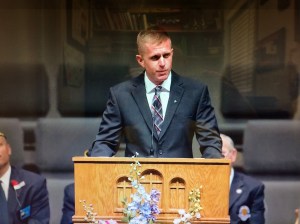
Veterans' Day 2014

___________________________

Good morning ladies and gentlemen, and thank you for the opportunity to speak here today.

Before I begin, I must confess that I’m here due in large part to the fact that I’m simply trying to be a good Marine.

A few months ago I was approached by a good friend of mine, LtCol Scott Ballard, USMC retired.

LtCol Ballard called me up and said he wanted to stop by my office for a friendly visit… he’s never done that before.

Now, I’ve been out of the Marine Corps for a few years, but I’ll confess that I experienced a little trepidation about the Colonel’s visit. Maybe it was just left over from the days of speaking only when spoken to by a field grade officer, I don’t know, but I was a little nervous.

So LtCol Ballard stopped in and we had a friendly chat and visited for 10 or 15 minutes before the other shoe- or combat boot, as it may be- dropped.

“Stephen,” he said, “I don’t know if you’d be interested or not, but as you know I spoke at last year’s Veteran’s Day event at Lakewood Baptist Church, and they’re wanting me to help identify someone to be this year’s speaker…”

That was the Colonel’s way of saying, “Tag- you’re it Marine!”

So like any good enlisted Marine, I said, “aye-aye sir” and marched with my orders. And here I am.

But I’m kidding, of course. I’m more than humbled and honored that the Colonel and the staff of the American Legion Post would consider me for the occasion, and I would like to thank them all for this opportunity.

In talking with the Colonel about speaking today, I explained how I wasn’t sure I’m the right person for the job. I have no grand combat exploits to tell. I didn’t suffer any tragic war wounds or have a chest full of medals for valor. I’m no hero… I’m just a regular Marine.

“Just tell a story,” he said.

So I gave that some thought, and I came to the conclusion that I’m not really comfortable telling my own lackluster story, when there are so many men and women out there that have truly extraordinary ones.

I guess I feel a little embarrassed to stand here today drawing attention to myself, because there truly are heroes among us, despite that term being somewhat over-used in recent years, and they are the ones deserving of the credit.

But back to my purpose today… “just tell a story,” the Colonel said.

So I thought about it, and the only way to say it is this: my story is not mine at all. It’s the story of veterans- all of us.

And after all that’s what today all about – Veteran’s Day.

Webster’s defines a veteran as “an old soldier of long service or a former member of the armed forces.”

While I don’t disagree with that definition, it’s a bit mechanical, and I say that because it leaves so many things unmentioned.

It does an adequate job of telling us what a veteran is… but it fails miserably in telling us who our veterans are.

So that’s what I’d like to do… talk about who our veterans are.

———————————————–

The definition doesn’t allude to the turmoil experienced by all Soldiers, Sailors, Airmen and Marines when they find themselves saddled with the task of informing their loved ones that they would soon be shipping out for war- either by choice or mandate.

For me, that was a night not unlike many others. It was 2005 and I had just recently re-joined the Marine Corps Reserve after being out for several years. My wife- who was very pregnant at the time with our second son- sat with me in our living room watching TV, after we’d put our three year-old son to bed.

My stomach was in a knot, but somehow I finally got up the gumption to tell her that her that a deployment opportunity was on the horizon and they were calling for volunteers.

I didn’t really know how to advance the conversation beyond that point, but she was obviously reading my mind.

“Are you thinking you want to go?” she asked.

My response was to say- almost apologetically- “I’d kinda like to.”

And with tears welling up in her eyes, knowing full well that I had a choice in the matter, my wife’s only reply was, “well I don’t guess you really have any choice, do you?”

How many times has that same scenario played out in living rooms across America?

Those men and women- the ones that have had to look their wives and husbands in the eye and say it’s time to go- they are your veterans.

———————————————–

But I should probably back up just a bit.

When I rejoined the reserve, I really did it with one intention- to deploy to either Iraq or Afghanistan at the earliest opportunity.

I didn’t have to wait long. The Marine Corps soon announced that it need volunteers for a deployment cycle, and it didn’t matter what your military occupational specialty was because they were filling billets for a unit called “PRP.”

Well, in the lingo that I knew, the acronym “PRP” stood for Provisional Rifle Platoon, otherwise known as combat replacements.

“This is it!” I thought. I’m going to get my chance at an assignment with an infantry unit and fulfill the age-old axiom that the Marine Corps lives by: “Every Marine is first and foremost a rifleman.”

Well… not exactly. In this instance, PRP was short for Personnel Retrieval and Processing- formerly known as mortuary affairs, or in wars past as graves registration. The primary mission of the unit is the timely and proper evacuation of our battlefield casualties back to the United States for burial.

I gave it some thought, and in the end I decided that as unpleasant a business as that may be, it was a very important one.

“No one left behind” is a common phrase in the military. It was time to put my money where my mouth was. So I signed up.

Which brings me back to that conversation with my wife that night.

A short time after that, I hugged and kissed my wife, my newborn son, and my 3 year-old before heading out the door with my sea bags packed.

And that scenario too, has been repeated all across the country, far too many times to count.

All the men and women who packed their gear and kissed their babies goodbye- some for the last time- they are your veterans.

———————————————–

Shortly after I arrived in Fallujah, we were sent out on our first recovery mission. A Humvee had been hit by an improvised explosive device. Several Marines had been wounded, and one had been killed.

Our team arrived at the attack site in the pre-dawn hours and we were met by a young, solemn-faced Staff Sergeant who explained the security situation, the attack, and then pointed us to the vehicle.

He left us to the grim task of recovering the fallen Marine from the vehicle, and once completed, prepared us all for extraction from the area. But before we all mounted up in our vehicles, he paused and thanked us.

The SSgt told us that the Marine that had been killed was only on the mission that night because he wanted to be. His unit’s tour was at its end, but he’d tagged along just to make sure- one last time- that the crew that was replacing him was locked-on. He didn’t even have to be there. Had he not gone, the SSgt I was speaking to would probably have been in that seat.

That sobering reality was visible all over the SSgt’s face.

How many of our servicemen and women have lived through it- right next to others that didn’t- and been tormented by the question, “Why them and not me?” Those men and women are your veterans.

———————————————–

One afternoon in Fallujah our team was at the command post with nothing much going on. In our business, boredom was a good thing.

We were situated right next door to the battalion surgical center, so you can probably imagine some of the activity that went on around there.

Suddenly we heard the sound of vehicles rapidly approaching, with horns blaring and someone shouting.

The vehicles roared up to surgical and a frenzy of Marines and Navy Corpsmen swarmed over one particular Humvee, off-loading casualties and rushing them inside.

One Marine- the one that we’d heard doing all the shouting- was obviously distraught.

He dismounted from the turret of his vehicle, slammed his helmet on the ground and turned loose a blistering string of profanity as he kicked the helmet and slung the rest of his gear onto the ground before collapsing to his knees and weeping uncontrollably.

A Navy Chaplain was soon at his side.

His buddy was one of those casualties and had been killed by a sniper.

That Marine, and countless others that lose their buddies in hostile foreign lands- they are your veterans.

———————————————–

As part of our job, we always dealt with a representative from the unit of a fallen Marine, usually the most senior enlisted men and officers. There were business matters that had to be tended to: positive identification, inventory of gear and personal affects, etc.

As a result, senior leadership visited us often, and they were familiar with our processes, procedures, and some of the challenges we faced.

One of those challenges was that we weren’t always able to get a fallen service member immediately en route for evacuation. Sometimes aircraft weren’t readily available, sometimes weather prohibited flight, sometimes hostile fire delayed them.

For any number of reasons, sometimes we just couldn’t start them on their final journey home right away, and our senior leaders understood this.

As such, a grim reality is that our unit had to maintain a walk-in refrigeration unit for such occasions. It was around in the back of our building, behind camouflage netting, out of sight from everyone. Those senior leaders knew about it though.

On more than one occasion, long after a casualty was brought in, processed, and awaiting a transport helicopter, we would get a knock on the door in the darkness.

We would open it to be greeted solemnly by one or two of those senior leaders, sometimes with a Navy Chaplain in tow, with a simple request: “can I step out back to spend a few minutes with my Marine?”

It was against our policy to do this once the refrigeration unit was closed, but I don’t have to tell you what our reply was. We violated that policy every single time.

I would unlock the unit and stand by, cover in hand and head bowed while those leaders attempted to make their peace with what had happened to one of those in their charge.

It wasn’t until I saw a Captain of Marines lift his head from prayer one night at the doorway of that refrigeration unit with tears in his eyes that I fully appreciated the burden of command.

That Captain, and all those that lead us into battle, willingly bearing that burden and living with the consequences- they are your veterans.

———————————————–

And while there are many more instances that I could relate that are no less poignant than these, I’ll relate just one more.

While serving at AL Taqaddum we received word that a unit was bringing in a casualty, but this one was going to be handled a little bit differently. Members of his unit would be present while we conducted our business, which was expressly forbidden under normal circumstances.

Prior to their arrival we learned that the casualty was the first Navy SEAL to be killed in Iraq, and his teammates were accompanying him all the way home.

There was much trepidation prior to their arrival, but once they were at our facility it became clear that these men were in fact the consummate professionals that they were reputed to be.

What we saw was not a down-trodden crew, hanging their heads and moping about in sorrow.

They were solemn, yes. But there was an indescribable air about them. They had a grim task at hand, and they were mourning their friend and comrade, but it was very clear that this too would pass.

And when it did, they would be right back in the fray, doing what they train to do.

Absolute professionals.

And that is the final point that I’ll leave you with- the men and women who we task with our nation’s most daunting tasks, the most dangerous missions in the most hostile lands, to go abroad and do our country’s bidding despite all the sacrifices and personal loss- those are your veterans.

———————————————–

In closing ladies and gentlemen, I would like to simply say thank you.

I thank those of you who have served… for your service.

I thank those of you who have loved and supported those who have served.

And I thank this great nation of ours for the opportunity to serve. For that I owe a debt of gratitude.

May God bless our veterans, and may God bless the United States of America.

Memorial Day in Iraq

Author’s note: Another piece from my blog during Operation Iraqi Freedom. It struck me at the time that I was spending Memorial Day living and seeing exactly what that day is all about in our country, and probably changed forever the seriousness and reverence with which I observe the holiday.

Sunrise, somewhere along MSR Michigan, Anbar Province, Iraq.

______________________________

Somewhere in America, a family sleeps late in comfortable beds in their air-conditioned home, because it’s a national holiday and there is no school or work.

Somewhere in Iraq, a Marine rises before dawn after sleeping for a few hours on a hard, concrete floor or on the dusty ground. He doesn’t even know it’s a holiday as he preps himself and his gear for another day in a hostile land.

The family sits at their kitchen table and has a late breakfast of eggs, omelets, or pancakes, with fresh milk and coffee while they leaf through the newspaper and talk about what they’ll do for the day.

The Marine sits cross-legged on the ground, cuts open his MRE with his knife, and eats it cold. It’s not even a breakfast meal, and he washes it down with the first swallows of what will turn out to be gallons of water that he’ll drink during the course of the day. He’ll chat with another Marine or two about the day’s operation.

The family will take leisurely showers under steaming hot water, with soap and shampoo. They’ll dry off using fresh, plush towels and put on comfortable slippers.

The Marine might get a chance to take a field bath using baby-wipes. He’ll knock the edge off of the whiskers protruding from his face with something resembling a razor. There will be a vain attempt to mask his prominent odor with deodorant and perhaps a fresh t-shirt, but he hasn’t had fresh cammies to put on in a week, making it all an effort in futility. He puts on the same boots he’s worn for months, the ones that have caused his feet to be covered in calluses.

The family is off to the lake for the day. They’ve loaded their boat with coolers, picnic supplies, water skis and fishing poles.

The Marine is off on yet another patrol. He’s loaded his Humvee with water, medical supplies, a heavy machine gun, and extra ammunition.

The family cruises across the glistening water, bouncing on the boat wakes and waving to the other boaters.

The Marine rides along dry, dusty roads behind bulletproof glass and armor. Lots of people watch him pass. Nobody waves.

The family stops at lunchtime on an island in the lake. Pulling up to the beach, they unload their supplies and set out a comfortable spread. The children run about and explore the area.

The Marine stops about lunchtime, too. But his purpose is to set up a vehicle checkpoint to search for insurgents transporting bomb-making material. He unloads concertina wire, signs, and temporary barriers. He doesn’t eat lunch. No one ventures far from the vehicles.

On the lake, the family enjoys the sunshine wearing their swimsuits and flip-flops. They slather themselves in suntan oil to develop a nice, golden tan.

Out on the patrol, the Marine detests the sun because the temperature is already well over 100 degrees. He labors under the weight of his protective gear and sweats clear through his cammies. He smears the strongest sunblock he can find on what little skin is exposed because it’s been red with sunburn for days on end.

In the afternoon, the family heads back to the shore and loads up for the trip home. The kids fall asleep in the back seat during the ride, and the local radio station plays the latest hits.

After wrapping up the checkpoint, the Marine mounts back up and moves out toward their final destination for the day. Everyone is tired, but they struggle to stay awake and stay alert. The only radio they have is the one that links them with the rest of the patrol and the command post.

On their drive home, the family hits a pothole in the roadway and complains about what a lousy job of road maintenance the county is doing.

On his drive back to the operating base, the Marine is hit by an IED.

At the end of the day, the family arrives back home a little tired, but safe and sound, and happy to have spent the day together.

In Iraq, the Marine is mourned by his comrades and commanders. He’s laid in a flag-draped casket for the journey home.

In America, as the family settles in for the evening, there is a knock at the door. Standing at the threshold are two solemn faced Marines in dress blues…

Pardon my Sensationalism

Author’s note: I originally published this piece on Red State Rant, for a lack of a better place, while I was still a slick-sleeved patrolman. It struck a chord with some of the online blogs and got picked up and passed around a bit. Still hurts to remember this one. I did okay handling incidents involving most anything, but when it came to kids as victims I didn’t do so well.

_________________________

A couple of days ago I had the unfortunate task of taking part in a search for a 4 year old boy that went missing from his home. My role in the search was that of a minor player on the periphery of events, canvassing a nearby neighborhood.  Even though I’d been instructed to remain in service for other calls, I just couldn’t stay away.

Here is the story from our local paper, the Gainesville (Ga) Times.

While the newspaper story is factual and adequately relates the tragedy, for me it fails to convey the overwhelming feeling of desperation that continued to grow as the minutes ticked by. Radio channels were cleared, alerts were made by phone, media, and in person. Numerous agencies responded. Officers were called off of other duties and training to assist. Helicopters, fixed-wing planes, boats, and K9 trackers all raced to the scene. The sense of urgency was palpable.

But the telling moment came when a fellow deputy radioed that he had located the boy’s Cocker Spaniel on a boat dock. The dog had not left that dock until someone arrived. You can choose to believe it or not believe it, but I’m a dog man, and I’m telling you- dogs know. That little dog knew.

We continued the area search, but I had a terrible, sinking feeling. As quickly as the dive team could assemble, they entered the water at the dock, where they found the boy in 12 feet of water. EMT’s immediately began attempts to revive him, and a massive effort to block intersections through town resulted in a parting of traffic like that of the Red Sea, allowing the ambulance and its escort units to race to the waiting emergency room at unprecedented speed. But all efforts failed. He’d simply been in the water too long. Alex Taylor, dressed in his gray shorts, green t-shirt, and Thomas the Train sneakers was dead at 4 years old.

Folks, I’m not gonna lie, and I’m not ashamed of it. When that went out over the radio, I parked the patrol car behind a church and cried. I suddenly had an almost uncontrollable desire to rush to the daycare center where my own 2½ year old son was probably out on the playground enjoying the beautiful spring weather, just to make sure he was okay. I couldn’t imagine losing him that way. I’m sure what that family is going through is incomprehensible to someone who hasn’t experienced it. But there wasn’t much time for sorrow. Soon the radio crackled to life and I was back to work.

That night I went home and hugged my son like it might just be the last chance I ever had to do so. I told him that I love him, and we played on the floor together until bedtime. After he was safe in his bed asleep, I sat on the floor in the hallway outside of his room and wept shamelessly. God keep our children.

Standing in the Gap

Author’s note: I wrote this piece for an internally published, quarterly newsletter for the Hall County (GA) Sheriff’s Office, a department of about 450 personnel. I was a Sergeant serving as the Public Information Officer at the time, so I was in charge of the rag and ended up being the primary writer. Getting cops to write much of anything other than an incident report was quite the chore.

____________________________

Standing in the Gap

“To expose oneself for the protection of something; to make defense against any assailing danger; to take the place of a fallen defender or supporter.”

Question: Do these words strike a chord with you? Should they? More directly, how seriously do you take your job? Taken at face value, that’s an easy question. But how serious do you really take it? Is it just a paycheck, a means to retirement, or a source of job security in a tough economy? Taken as a meaningful question, it’s not one to be answered lightly.

I think a great number of us probably entered this profession with a starry-eyed vision of greatness. And that’s okay; there’s no shame in thinking that we could make the world a better place by putting bad guys in jail. That’s why little boys (and girls) grow up playing cops and robbers, and we should all take pride in wanting to be the good guys.

But as the shine has worn off our badges, the reality is evident. We can’t save everyone– some don’t want to be saved. We won’t change a lot of neighborhoods– some don’t even want us around. The public won’t always hail us as heroes and praise our actions– sometimes they will hate us and condemn our actions. Then there’s the bad politics and disappointments in the justice system to drag us all down.

Does it wear on you? Do you sometimes wonder why you continue to do it? I don’t mind admitting that I sometimes grow weary of it. I think it comes with the territory, and that it’s merely human nature. But it’s what we do with that fatigue and those doubts that define us. How do we acknowledge all of these things and continue to carry out our sworn duties?

Any number of people will have their own individual answers. For me, I sleep soundly at night knowing that in a world that’s far from black and white, I don’t operate in the gray area. At the end of the day, I can say unequivocally that I’m on the right side of things. As I raise my two young sons and try my best to teach them right from wrong, I can look them squarely in the eyes and tell them that their Dad is one of the good guys. I never want the shame of knowing that they might question that.

Life is easy. Go get a job, earn a living, pay your bills, live honorably, and look out for you and yours. Nothing wrong with any of that. But for some of us, at some point, we decided that we would be the ones to stand in the gap. We knew that someone had to do the job, and we asked ourselves a very simple question: If not me, then who? And we stepped up.

Take pride in that, and never forget why we do what we do.